
Do you really understand what a “secure multi‑chain wallet with transaction simulation” does — and when it helps you?
Is a Ledger hardware wallet truly the last word in self-custody?
Haziran 22, 2025Validation Check 2026-03-22 13:31:30
Mart 22, 2026If you trade across L2s, run yield strategies, or sign frequent approvals for DEXs and lending markets, the difference between a blind wallet and one that simulates transactions is not cosmetic: it changes the failure modes you face. Rabby Wallet positions itself as a practical tool for DeFi power users who need multi‑chain convenience and tighter pre‑signing visibility. This article explains how those features work under the hood, what trade‑offs they introduce, and how to decide whether the Rabby Chrome/Chromium extension is the right choice for your workflow in the US regulatory and UX environment.
Start with the question: when you hit “confirm” in your extension, what exactly are you authorizing? In most basic wallets, signing a transaction simply releases a cryptographic signature for the network to execute code — you see raw numbers and, maybe, a token amount. Rabby aims to change that interaction model by simulating the transaction first and running automated security checks before a signature is produced.
How Rabby’s simulation and pre‑transaction scanning work (mechanism-level)
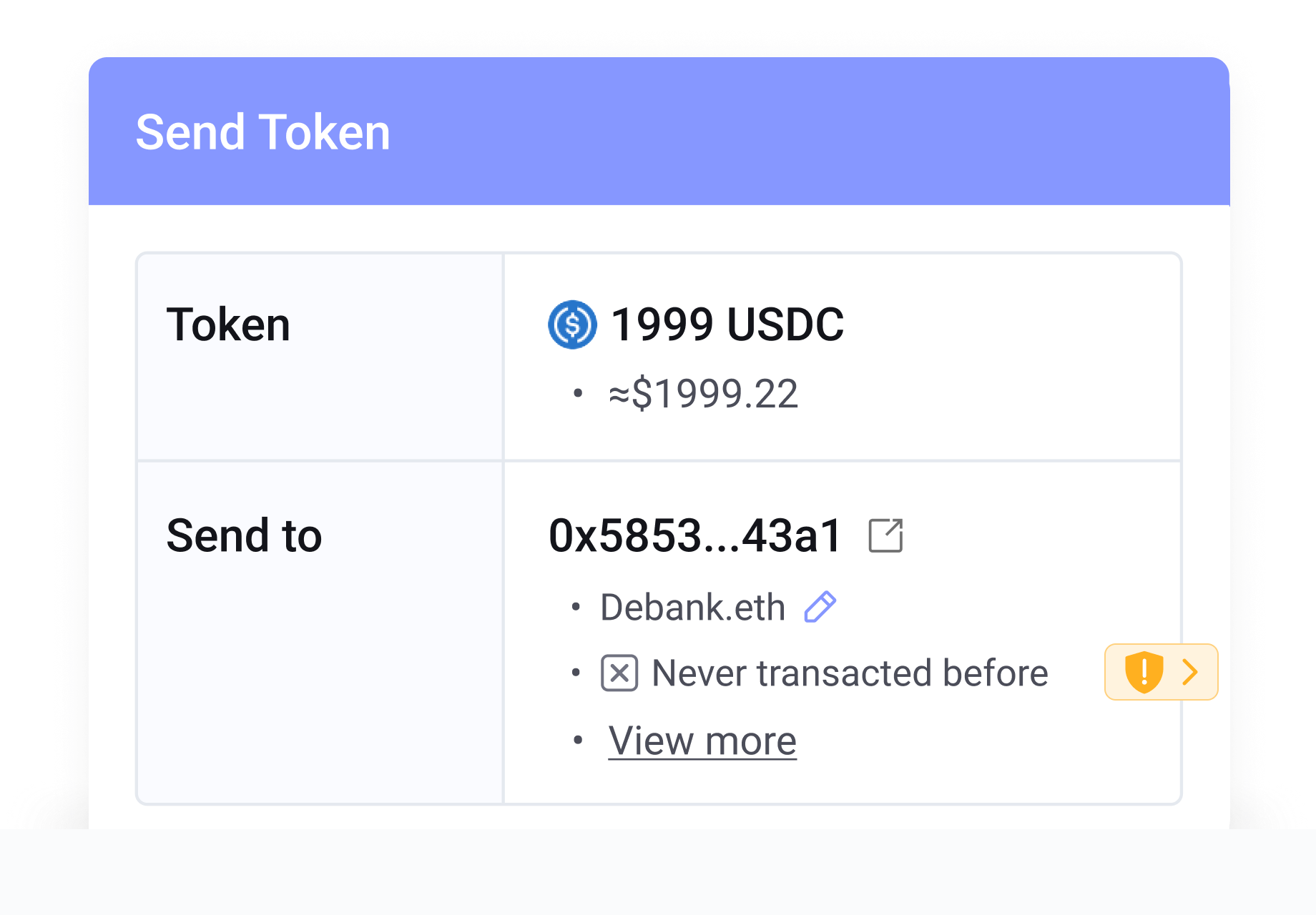
Simulation: before the extension returns a signature, Rabby runs the proposed transaction locally against a node or simulator to compute the exact state changes the call would produce — token balance deltas, approvals created, gas consumption, and potential internal transfers. This is akin to a dry run: the wallet asks, “If this transaction were executed now, what would my balances look like?” and displays that result so you can judge whether it matches your intent.
Risk scanning: alongside the numeric simulation, Rabby’s security engine flags patterns associated with common exploits: interactions with addresses that were previously compromised, approval requests that grant unlimited allowance to a contract, non‑existent or fresh contracts, and suspicious internal calls. These checks do not prevent a transaction automatically (except in configured institutional setups); they inform the human operator so they can refuse or adjust the signature.
Automatic network switching and gas top‑up: Rabby detects which chain a dApp expects and switches networks for you, reducing accidental cross‑chain mistakes. If you land on a chain with no gas tokens, the cross‑chain gas top‑up feature lets you move gas tokens from another network — a convenience when you manage many chains and want to avoid juggling small native token balances.
Where these mechanics matter — real user scenarios
Scenario A — preventing blind approvals: You’re approving a DEX router and a malicious frontend injects a higher allowance call. With simulation plus approval revocation tools, Rabby shows you the exact allowance delta and lets you cancel existing approvals from the wallet UI. That’s materially different from wallets that show only the method signature or a raw number, leaving users to infer risk.
Scenario B — complex composable transactions: Flash‑loan or aggregator transactions can bundle several internal steps. Rabby’s simulation displays net token changes and gas cost so you can confirm the composite outcome rather than one visible surface action. For active DeFi traders who execute batched strategies, this reduces surprise loss from unexpected internal transfers or slippage.
Scenario C — institutional workflows: Rabby integrates with multi‑sig and custody services (Gnosis Safe, Fireblocks, Amber, Cobo), allowing teams to run simulations and then route signatures through enterprise approvals. That combination gives an audit trail and human checks before on‑chain finality.
Trade‑offs, limitations, and the important caveats
No simulation is perfect. Simulating against a recent blockchain state is powerful, but it is sensitive to timing, mempool front‑running, and Oracle updates. A simulation shows what would happen at the moment of the run — not after a competing bot, miner reorg, or dramatic price oracle swing. In short: simulation reduces certain classes of human error, but it cannot guarantee the transaction’s eventual outcome in volatile, adversarial conditions.
Open‑source + security history: Rabby’s MIT licensed codebase allows external audit and community review, which is a structural security advantage. That said, the project did experience a contract exploit in 2022 linked to Rabby Swap; the team froze the contract, compensated users, and increased audits. The exploit underlines that a wallet’s UI and simulation are helpful, but smart contract risks still exist — especially for bespoke or recently launched protocols.
Missing features: if you need an integrated fiat on‑ramp or native in‑wallet staking, Rabby currently lacks those conveniences. It excels at visibility, approval management, and chain coverage (90+ EVM chains), but it assumes you will fund wallets externally and use separate staking interfaces when required.
How Rabby compares to common alternatives — mechanism, not marketing
MetaMask remains the default for many users because of ubiquity and tight exchange integrations; however, it historically offered less pre‑signing simulation detail. Coinbase Wallet and Trust Wallet provide simpler onboarding and fiat rails in some cases but aren’t optimized for granular transaction simulation and institutional multi‑sig flows. Rabby’s differentiator is the explicit pre‑transaction simulation plus automatic network switching and approval revocation features — a stack designed for users who prioritize informed signing over one‑click convenience.
That doesn’t make Rabby superior for every user. If your main requirement is on/off ramps, custodial convenience, or minimal learning curve on mobile, other wallets may be a better fit. For advanced DeFi operators, though, the combination of simulation, revocation tools, and hardware wallet compatibility (Ledger, Trezor, Keystone, and others) presents a compelling risk‑management toolkit.
Installation, platforms, and where to grab the Chrome/Chromium extension
Rabby is distributed as a Chromium‑based browser extension (Chrome, Brave, Edge), mobile apps (iOS, Android), and desktop clients (Windows, macOS). If your work involves heavy browser‑based dApp interaction, the extension provides the fastest path to simulation before signing. For readers who want a single, authoritative source for the extension and related downloads, check the official resource for the rabby wallet.
Practical note for US users: browser extensions and desktop clients face different attack surfaces. Extensions live in the browser context and are susceptible to malicious sites or browser‑level malware that attempt to prompt signatures; hardware wallet integration is an effective mitigation. Use a hardware signer for high‑value operations and reserve seed phrase imports for low‑risk, read‑only monitoring when possible.
Decision framework: when to choose Rabby for your DeFi operations
Use Rabby (or a similar simulation‑first wallet) when:
– You sign complex transactions frequently (aggregators, flash‑loan patterns, batched swaps).
– You manage multiple EVM chains and need reliable automatic network switching to reduce human error.
– You require fine control over approvals and an easy revocation workflow.
– You operate inside an institutional or multi‑sig process where pre‑signing visibility needs to feed into governance approvals.
Consider alternatives when:
– You rely on fiat rails inside the wallet for purchasing crypto.
– You prefer the simplest onboarding for casual usage and minimal security configuration.
– You prioritize native staking inside the wallet (currently missing in Rabby).
FAQ
How does transaction simulation actually prevent losses?
Simulation reduces human‑error losses by revealing the concrete state changes a transaction would cause before you sign. It exposes unexpected token drains, internal transfers, and allowance changes that textual method signatures can hide. However, it cannot protect against future mempool front‑running, oracle manipulation that occurs after simulation, or undiscovered contract vulnerabilities. Think of it as a powerful inspection tool — not an absolute insurance policy.
Is the Rabby Chrome extension safe to use with hardware wallets?
Yes. Rabby integrates with hardware devices such as Ledger and Trezor so that private keys never leave the hardware. The UI runs simulations and presents human‑readable outcomes, while the hardware signer still performs the cryptographic signature. This combines Rabby’s visibility with the stronger key storage of external devices — a common best practice for high‑value accounts.
What happened in the 2022 exploit and does it mean Rabby is unsafe?
The 2022 incident involved a smart contract linked to Rabby Swap and resulted in losses; the developers froze the contract and compensated victims, then tightened audits. The episode is a reminder that wallets and interfaces can help manage risk but cannot eliminate vulnerabilities in smart contracts themselves. Rabby’s open‑source code and post‑incident security work reduce some risks, but users should maintain skepticism for new or unaudited contracts.
Can Rabby replace MetaMask entirely?
Technically, yes — Rabby can import existing wallets and even flip to be your default extension in place of MetaMask. Practically, whether you should depends on your needs: Rabby is oriented toward visibility and control; MetaMask remains more integrated with some fiat and exchange ecosystems. For DeFi power users focused on informed signing, Rabby is often a superior operational choice.
Final takeaway: Rabby’s core value is procedural — it changes the signing workflow from a one‑step act into a small verification routine that surfaces concrete outcomes. That shift matters when you run leveraged or composable strategies on multiple chains: it reduces a class of human errors and stealthy approval risks. But simulation is not an omnipotent shield; timing, oracle integrity, and contract correctness remain external constraints you must manage with hardware wallets, audits, and conservative operational practices.
